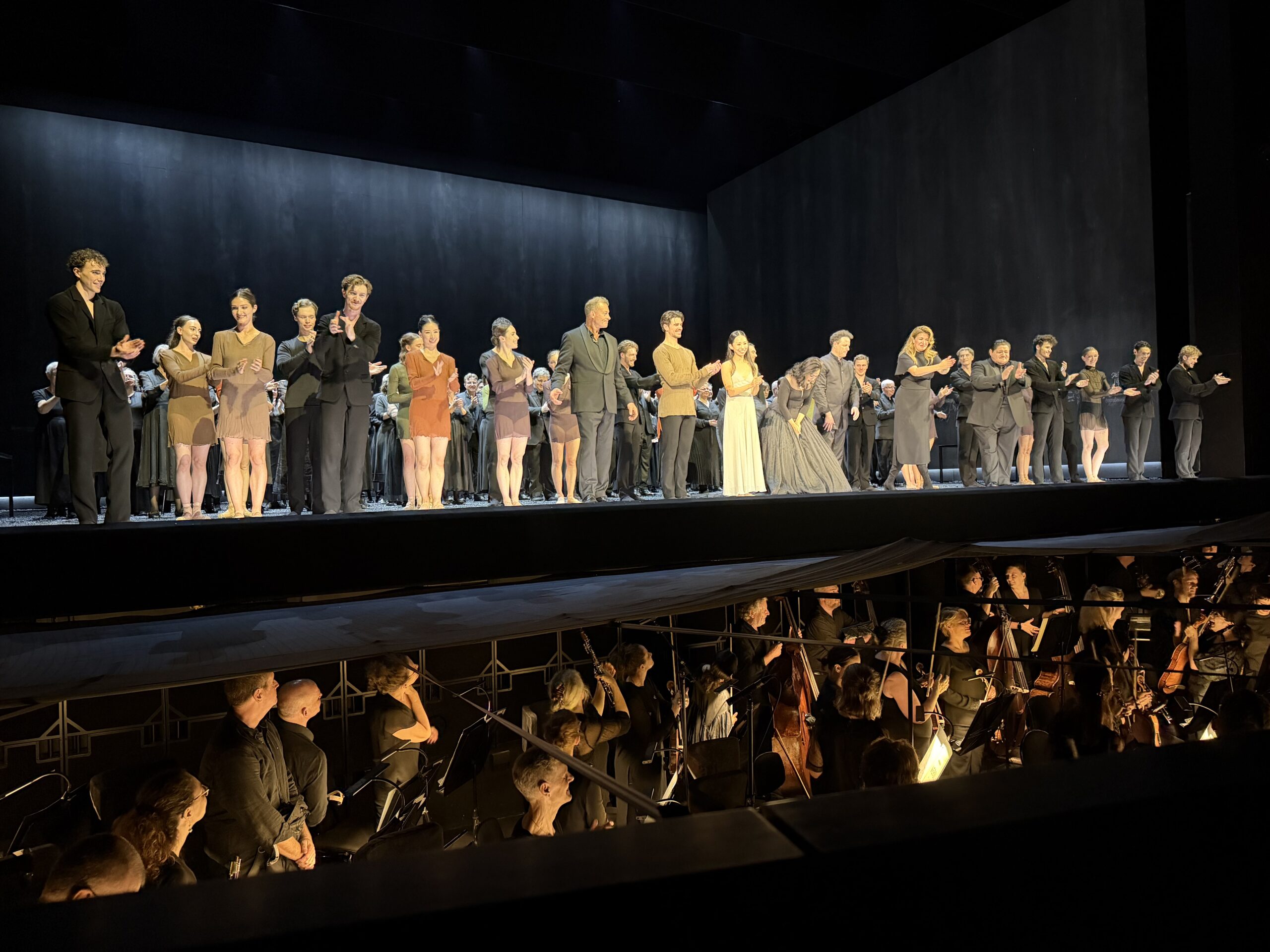
For a Brisbane audience, Messa da Requiem feels like exactly the kind of event people complain we usually have to fly south or overseas to see. Queensland Ballet’s season is not just another big-ticket production. It is the first production staged in QPAC’s new Glasshouse Theatre, and that fact matters, because this work has the scale, severity and strangeness to make a new venue announce itself with real authority. QPAC lists it as playing in the Glasshouse Theatre, while Queensland Symphony Orchestra describes it as both the first production in the new theatre and the work’s Queensland debut.
What makes this piece so compelling, especially for anyone drawn to the gothic, is that it does not offer prettiness in the usual ballet sense. It offers grandeur, dread, ritual and mortality. The QPAC description captures that beautifully: this is where “music, movement, and mortality collide,” with Christian Spuck’s staging turning Verdi’s score into a “living sculpture of sound and movement.” It moves through whispered prayer, apocalyptic terror and something more mysterious than consolation. That emphasis on life, death and what may lie beyond gives the work a genuinely gothic charge, not in a camp or decorative way, but in the older sense: spiritual darkness, human fragility and sublime spectacle.
The origins of the piece go a long way toward explaining why it lands so differently from a conventional ballet. Verdi’s Messa da Requiem is not originally a dance work at all, but a monumental setting of the Catholic funeral mass, composed in memory of the Italian writer Alessandro Manzoni and first performed in Milan on 22 May 1874. From the beginning, it carried a reputation for being intensely dramatic, even operatic, which is part of why it has endured so powerfully in concert life.
Christian Spuck’s achievement was to recognise that the music already contains theatre, terror and human drama in abundance. His Messa da Requiem was originally created for Ballett Zürich, and later travelled internationally before arriving in Australia; reviews of the current production note that it was first conceived for Zurich Ballet, while other coverage traces the work back to its 2016 Zurich premiere. That matters because this is not a familiar story ballet awkwardly dressed in contemporary clothes. It is an imported, high-concept European work built from sacred music, abstract imagery and massed bodies. Brisbane is not simply getting another revival of Swan Lake or Giselle; it is getting something stranger, darker and much more compositionally daring.
And the scale is extraordinary. QPAC describes a staging with 36 dancers, over 110 singers and Queensland Symphony Orchestra musicians, while the season details identify the creative team and the collaboration between Queensland Ballet, QSO, Brisbane Chorale and Canticum Chamber Choir under conductor Simon Hewett. On paper, that sounds immense; in practice, it seems designed to overwhelm. The famous Dies Irae alone, with its eruptions of terror and judgement, would make this feel less like an evening at the ballet than an encounter with some grand, beautifully controlled catastrophe.
That is why this season is such a real get for Brisbane. It signals ambition, confidence and international seriousness. A city can talk all it likes about cultural maturity, but moments like this are what make the case. To open the Glasshouse Theatre with a Queensland premiere of a work that fuses ballet, requiem mass, opera-scale music and a darkly ritualistic visual world is a statement that Brisbane does not just want crowd-pleasers; it wants major art. And for those of us drawn to the gothic edges of performance, Messa da Requiem sounds like a thrilling choice: severe, haunted, intellectually rich, and gloriously unlike anything balletic in the standard repertoire.
We look forward to seeing more productions at the Glasshouse and the many exciting shows on the events calendar this year.